
Technology has evolved rapidly over the last few decades, fundamentally changing the way modern society operates. Governments across the world are under growing pressure to keep pace, harnessing these new technologies to improve public services and deliver better experiences for citizens.
At the core of that challenge is data. Governments collect vast amounts of it, and used well, it has the power to transform how public services are designed and delivered. Digitising that data is the essential first step, enabling faster, more reliable services and laying the groundwork for innovation.
But digitisation alone is not enough. To build a truly digital society, countries need to get the foundations right. And that starts with Digital Public Infrastructure.
What is Digital Public Infrastructure?
Digital Public Infrastructure (DPI) refers to the foundational reusable components that enable the provision of modern public services. It is similar to physical infrastructure such as roads, rails and pipelines. These systems are purposefully built and maintained, shared by all, governed by clear rules, and vital to keeping society connected and functioning.
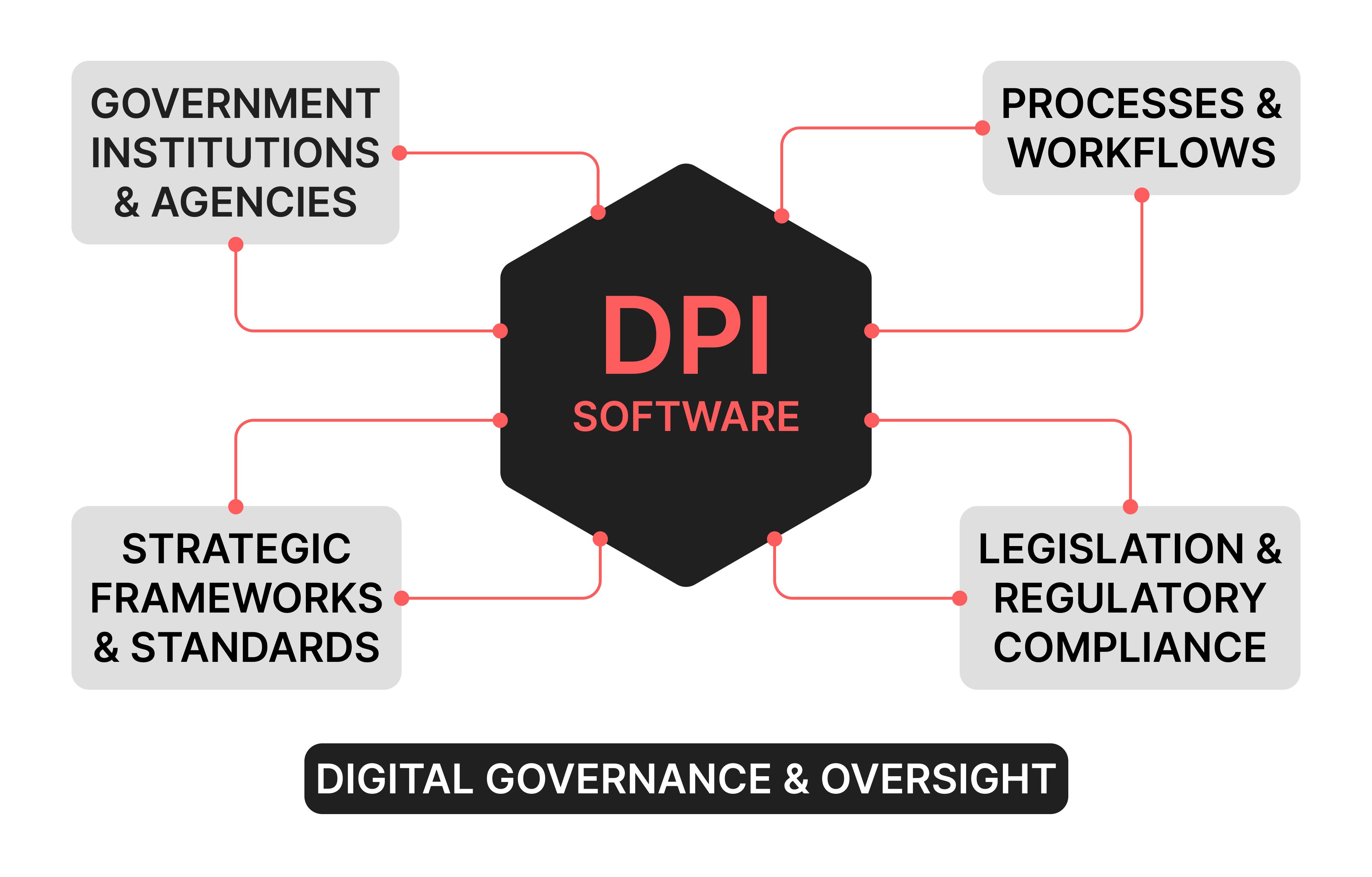
DPI has three core components:
- Digital components such as reusable software
- Non-digital components such as institutions, processes and roles, policies, legislation and governance frameworks
- Governance of the digital and non-digital components of DPI.
It serves the whole of society across all sectors and domains. It helps countries advance towards the Sustainable Development Goals (SDGs) and deliver a whole-of-government approach.
Properties of effective DPI digital components
For DPI to deliver real public value, its digital components need to meet certain standards. Effective DPI software should be:
- reusable in various contexts
- interoperable with other DPI software
- resilient and secure to protect national security
- based on open standards to avoid vendor lock-in
- user-centric and inclusive to serve the whole society
- considerate of the privacy needs of all stakeholders
- based on a sustainable financial and software development model
- supportive of the rule of law to ensure accountability for all stakeholders
These properties form the foundation of a well-functioning DPI ecosystem, and nowhere are they more critical to get right than in the interoperability platform.
The Role of the interoperability platform in DPI
Within the DPI ecosystem, the interoperability platform is often described as the connective tissue of a digital economy. While DPI provides the broader foundation, the interoperability platform is what brings it to life, allowing different digital services, agencies and systems to communicate with one another securely and seamlessly. It is not a single app or website but a foundational platform that sits at the centre of digital government, enabling the whole ecosystem to function as one.
When delivered through a whole-of-society approach, its multiplying effect is unlocked and everyone benefits:
- Citizens receive faster, more intuitive services. Agencies share and reuse data, eliminating the need for repetitive paperwork.
- Businesses gain efficiency through dedicated G2B and B2G APIs that automate and simplify interactions with the state.
- Governments optimise operations through automated back-office workflows and more informed, data-driven decision-making.
Realising these benefits requires more than technical capability. The scale of data sharing that makes this possible only works if citizens, institutions and governments trust the platform it runs on.
Interoperability platform as a trust building mechanism
At its heart, interoperability is about collaboration, both technical and social. And that collaboration only works if everyone involved feels confident in how data is being shared and protected. But trust is not a given, it has to be engineered into the platform itself.
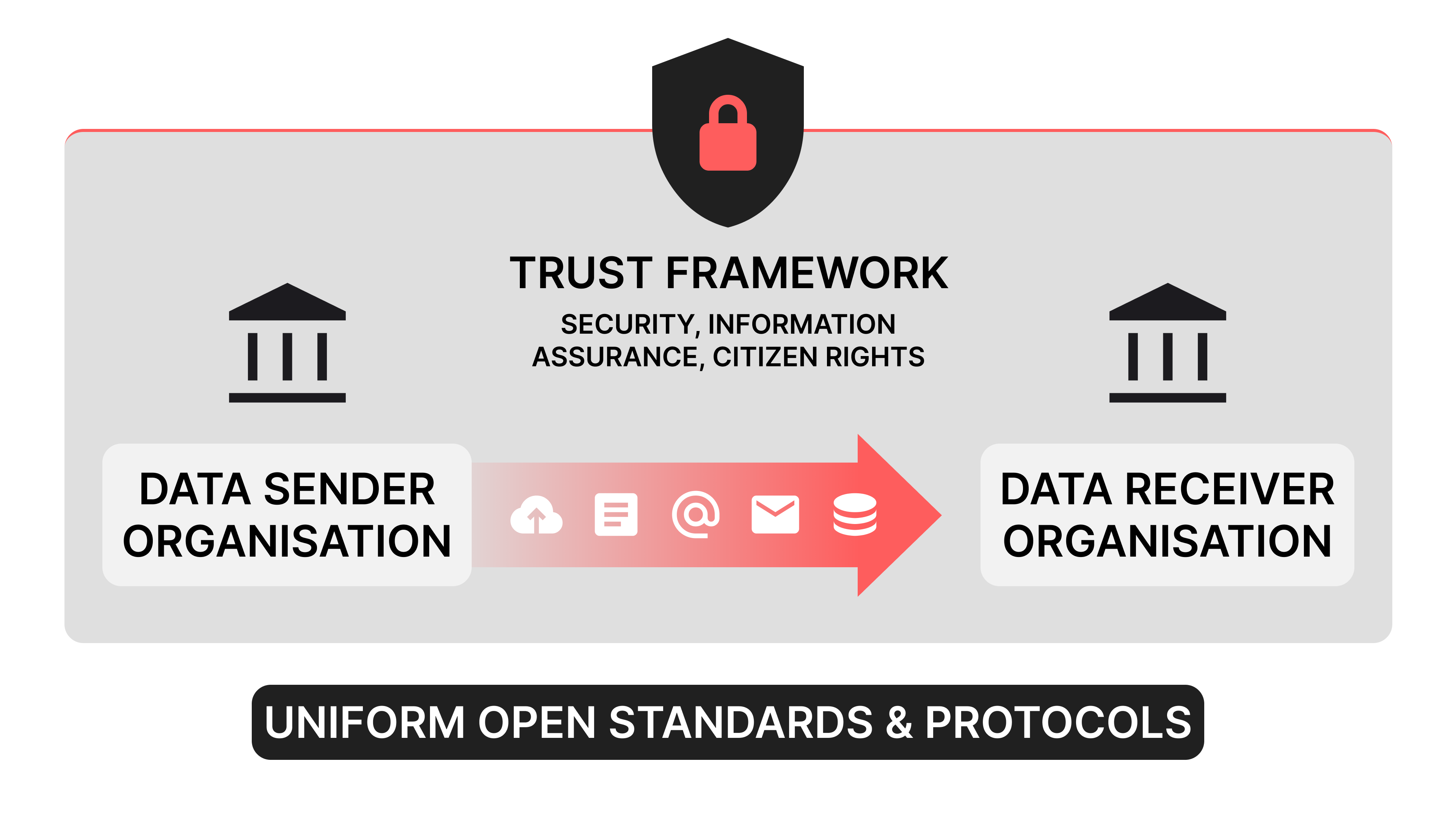
This requires a well-designed interoperability platform, which enables data-sharing institutions to maintain their sovereignty while being part of an enabling ecosystem. It should protect privacy by ensuring individuals have transparency and control over the use of their personal information, and enforce uniform security standards for all data exchange. By combining strong governance with a commitment to digital inclusion and accessibility, interoperability can foster a more equitable and connected digital society.
The design of a trusted interoperability platform needs to consider both digital and non-digital components.
Digital components of an interoperability platform
When designing digital components, the trust framework of the platform should include robust security measures, information assurance mechanisms, and clear protections for citizen rights.
Data exchange security covers three areas:
- confidentiality of data in transit by encrypting it
- integrity of data in transit using cryptography tools
- availability of the platform by avoiding a single point of failure and bottlenecks.
Information assurance encompasses:
- authenticating the data exchange parties using cryptography
- non-repudiation by creating a verifiable trail of the data exchange, which assures the integrity and origin of the data.
The citizen rights in democratic society require:
- protection against a surveillance state through decentralised data management and exchange
- transparency over how their private data is used by government
- individual control over sharing their private data outside of government.
The interoperability platform should implement its data exchange based on unified open standards and protocols. This enables systems to "speak" the same language. Common open standards for data formats include XML or JSON, while open standards for data exchange protocols include REST or SOAP.
This approach scales the trust framework, as well as supports uniform data exchange standards for all data exchange connections and transactions in a digital government. It creates traceability and accountability within a single solution that organisations nationwide can adopt.
Non-digital components of an interoperability platform
Non-digital parts of the interoperability platform involve frameworks, policies, supporting legislation, institutions and processes.
A national Interoperability Framework (NIF) defines how digital collaboration in a society operates. It outlines the main principles, governance and security aspects of interoperability. It also provides a conceptual model of integrated public service delivery.
For an interoperability platform implementation to succeed, there should be:
- a clear mandate for organisations and systems. This includes defining what data and services the data provider organisations offer. It also defines which data the data consumer organisations can access. This is often referred to as the record-once policy.
- user-centricity and implementation of a once-only policy. This policy allows different agencies to share and reuse data they already have about citizens. Agencies can fulfil their mandates whilst reducing the need to collect information more than once. This creates a seamless digital experience for citizens.
- mandatory use of the Interoperability Platform for all data exchange in digital public service provision. Using one robust solution makes governance easier. It also reduces risks and costs associated with using several different solutions.
One of the major factors that impacts implementation of an interoperability platform is the legal and regulatory environment. The clearer the rules around data, the easier it will be to implement and manage an interoperability platform. This includes rules on collection, distribution, protection and storage.
An example is the laws on individual databases or registers. These determine the mandate and scope of the data that organisations can collect. They also determine the services organisations are obligated to provide. This helps identify what data should be exchanged between organisations and for which purposes.
Another example is public information laws – these determine how data can be collected and exchanged. Personal data protection laws determine how citizen rights are protected in the interoperability platform, and, thus, support trust in data exchange. There should be a regulation that determines how digital evidence, including e-seals and timestamps, are supported in the court for legal purposes.
In addition to the legal and regulatory environment, there is the broader organisational environment, into which an interoperability platform is deployed. For success at an organisational level, there should be some significant changes. One key is identifying the key organisation or governing authority. This body will be responsible for managing the implementation of the interoperability platform and the larger interoperability ecosystem.
The second is growing the interoperability ecosystem and identifying members. This ensures the platform grows through member uptake. There also need to be governance structures in place, which manage government-wide platform operations and support integrated public service delivery.
Strategic DPI implementation with Cybernetica
Building effective DPI is one of the most significant investments a government can make. When done well, it transforms how public services are delivered, how data is shared and how citizens experience their interactions with the state.
But the technology is only part of the story. Sustainable DPI requires the right governance, legislation, institutions and expertise to be in place from the start and to evolve over time.
Cybernetica has nearly 30 years of experience helping governments build and implement DPI. We have developed a proven methodology that covers both the digital and non-digital aspects of the transformation, with our interoperability offering built around the Unified eXchange Platform (UXP). We offer a sustainable software development model in which customers can actively influence the product roadmap.
Our implementation approach is a phased journey, beginning with a comprehensive interoperability assessment to understand the current digital, legislative and organisational landscape. From there, we work collaboratively to develop the National Interoperability Framework, build capacity within governing authorities and onboard key registries and organisations to the platform.
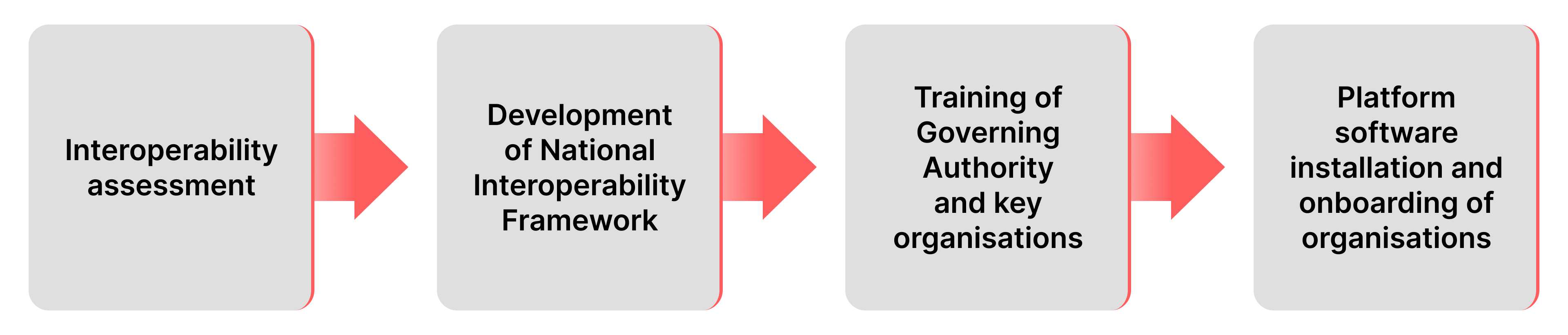
Implementation is not a one-off transformation. It is an ongoing journey, and Cybernetica typically works alongside a local partner in each country to combine global expertise with local knowledge. Throughout, we remain the primary support provider, ensuring continuity, technical excellence and long-term success.
If you are looking to build or strengthen your digital public infrastructure, we would be glad to help. Reach out to our team to start the conversation.