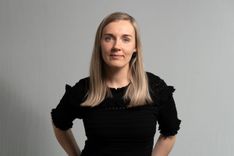
“We don’t have to solve difficult problems alone. We tackle them together as a team. ”
Kristiina is a tester in Cybernetica's Tax and Customs department, building and maintaining the systems Estonia's tax and customs officials rely on daily. From two-week sprints to the quiet satisfaction of watching a complex system finally click into place, Kristiina walks us through what the job really looks like, what it demands, and why she wouldn't trade it – except maybe for her project manager's seat, just for a day.
How would you explain what your team does to someone at a family gathering?
Our team develops complex information systems for the Estonian public sector. The systems we work on support important processes across areas such as taxation and customs, defence and military mobility, and social services.
So even though our work is technical and complex, it’s rewarding to know that we’re contributing to important public services and processes that have a real impact on people’s everyday lives.
What is the hardest part of this work?
One of the hardest parts is dealing with the complexity of the systems we develop. The systems are used by public sector officials in their daily work, so we need to understand different processes and requirements and make sure that everything works together as expected.
Sometimes even a small change can have an impact on other parts of the system, so we need to think carefully about the bigger picture. This requires good communication and teamwork.
That said, I think that’s what makes the work so exciting.
“When everything finally comes together and works as expected, it’s really satisfying for the whole team to see the result of our work.”
Is there such a thing as a typical week for your team? If so, what does it look like?
Our department is relatively large, so we're divided into smaller project teams, each working on a different project. To stay connected as a whole, we hold department-wide meetings twice a month where everyone comes together to share updates and stay aligned.
Our team is currently working on a project where the development cycle is based on two-week sprints, so we have a clear and consistent routine.
At the end of each sprint, we have a retrospective and plan the next one. During the sprint, we have daily stand-ups where we align on what we are working on, discuss any blockers, and make sure everyone is on the same page. We also focus on the planned development tasks, groom upcoming tickets and demo completed features.
The actual work can change from sprint to sprint, but the overall rhythm stays the same. This structure works well for our team because everyone has a clear focus and knows what we are aiming to achieve. It also gives us a predictable rhythm, which helps us maintain a steady pace of work.
You started as an intern at Cybernetica. How has your journey unfolded, and what kinds of projects have you worked on along the way?
I started as an intern, and after my internship I continued as a software tester. My time here has really been about growing within the same field.
Since joining, I've had the opportunity to work on three long-term projects, all in very different fields – export and customs, defence, and the social sector. Each project gave me valuable experience and taught me something new.
And with each new project, I took on more responsibility and learned more about testing and the systems we work with. That's how I gradually moved into my current role as a mid-level tester.
What's something your team refuses to compromise on, even under deadline pressure?
One thing we don’t compromise on is quality. Even under deadline pressure, we take the time to understand all the requirements, talk things through as a team and make sure we all agree we've landed on the best solution before it goes to the client.
What's would surprise people about your team?
People might find surprising how closely our team actually works together. Although everyone has different roles and areas of expertise, we check in with each other regularly and talk through questions and problems in our project channel. There is always someone who can help or offer another perspective. We don’t have to solve difficult problems alone. We tackle them together as a team.
What kind of person tends to click with your team?
Someone open-minded and willing to ask questions would click with our team. Since the systems we work on are complex, no one is expected to know everything. We look for someone with a mindset of, 'I don't know yet, but I'll find out.'
We really value people who don't just wait for answers, but are willing to investigate, ask questions, and think ahead. That also means noticing things that might become a problem later and raising them early.
If you could swap jobs with someone on your team for a day, whose job would you want and why?
I’d swap jobs with our project manager for a day. As a tester, I usually focus on a specific functionality during each two-week development cycle, making sure it works as expected and meets the requirements.
So, it would be interesting to see the project from a much broader perspective – how priorities change from one cycle to another, how the bigger picture is planned and managed, and how different pieces of work are connected. It would give me a better understanding of the project as a whole and how my work contributes to it.
Like Kristiina, you could find yourself building the systems that governments depend on — work that's complex, often invisible, and genuinely matters. We're always looking for curious, open-minded people who want their work to have real impact.
Explore our open positions.