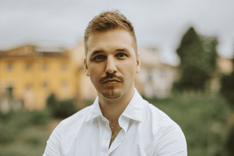
“The code I write is what stands between a real person and someone pretending to be them. That makes it feel worth doing.”
Digital identity sounds complicated, maybe even a little scary. What's it actually like from where you sit?
Honestly, pretty calm. Most days I'm reading carefully, thinking through edge cases, and writing a small amount of code that has to be exactly right. Underneath it all we're answering one question: is this person who they say they are, without ever seeing them? It looks calm from the outside because we put a lot of effort into keeping it that way.
What drew you to this field? Was there a moment it clicked?
I get to work on state-of-the-art solutions like SplitKey, with modern tooling like Rust and Cargo, and colleagues who really know their field. It clicked for me when I realised the code I write is what stands between a real person and someone pretending to be them. That makes it feel worth doing. It also means a lot that we're an Estonian company. The work we ship puts Estonia and Cybernetica a bit more on the global map. I like that we can stay Estonian and still compete in an ever more globalised world, and that my work is part of that.
Your team builds the lock millions of people walk through every day — logging into a bank, signing a contract. When it works, nobody notices. What does that responsibility feel like?
I don't feel it as pressure day to day. It comes out more as discipline. You don't cut corners, you assume your own code is wrong until you've checked, and you let people pull it apart in review.
'Nobody noticed' is about the best review we can get. Getting there is unglamorous: lots of testing, thinking like an attacker, careful review, and not trusting your first instinct. Crypto doesn't fail loudly like a crashed app — it can look fine and be quietly broken, so a lot of the job is imagining how things could break and closing those gaps first.
It's an odd kind of pride, but I'm fine with it. The invisibility is the point. There's something nice about knowing that an ordinary moment — someone signing into their bank on the bus — sits on top of work we did carefully.
What does a typical week look like for your team?
Most of the week is focused work on some part of the system. Around that there's code review, which for us is a real safety net and not just a formality. In this field careful is fast, because a bug caught in review is much cheaper than one in production.
Daily standups help in ironing out any blockers. A weekly meeting to go over what’s done, what’s the near-term battleplan and long-term strategy helps keep a project on track. There, productive discussions take place organically if a technical decision needs to be made.
What kind of person thrives on this team?
Less about what you know on day one, more about how you think. People do well here if they're careful, happy to say 'I might be wrong,' and actually enjoy the detail instead of just putting up with it. A bit of scepticism helps — the habit of poking at something to see how it breaks. And patience, because you can't rush this kind of problem.
I get the same feeling from riding my bike. It requires constantly paying attention and not getting sloppy just because you've done it a hundred times.
What is the hardest part of this work that you would not want to gloss over?
The responsibility isn't symmetric, and that's the heavy bit. A small mistake in a crypto protocol isn't a cosmetic bug. The cost of being wrong is high, and the people looking for your mistakes are clever and motivated. Staying rigorous over months and years, not just in one big push, is harder than it sounds. And like I said, there isn't much outside glory, so the discipline has to come from you.
It also keeps moving. Post-quantum computing means we can't treat today's crypto as solved forever. Rewarding work, but I wouldn't call it easy.